Cats are descended from desert hunters, and their bodies are built to conserve water. That biology once helped them survive on prey and occasional sips, but it works against them in a modern home where dry food is common and the water bowl sits untouched for days. Many owners do not realize their cat is mildly dehydrated until a vet mentions concentrated urine, a dull coat, or a urinary issue that could have been prevented. One of the simplest ways to change the pattern is to change how the water is offered. A pet water fountain runs a continuous stream, and that movement taps into instincts most cats already have. This article explains why flowing water attracts cats, what to look for in a fountain, and how to keep one clean and running well so it actually improves hydration over the long term.
Why Moving Water Draws Cats In
In the wild, standing water can be stagnant and unsafe, while moving water is associated with fresh, oxygenated sources. Cats carry that instinct into the home. A bowl of still water, especially in a dim corner, can look questionable to a cautious cat, while a gentle ripple signals something worth investigating. The effect is not imaginary; many owners notice a cat that ignored its bowl for years suddenly drinking several times a day once a fountain is introduced.
There is a sensory layer as well. Cats often prefer to see and hear water before they drink. Running water provides both, and the sound can reassure an animal that has learned to be picky about freshness. Some cats like to watch the stream, others paw at it, and a few drink from the falling water rather than the pool below. A fountain accommodates all of these behaviors, which makes it a flexible tool for different personalities.
Hydration and Long-Term Health
The benefits of better hydration go well beyond a full water bowl. Cats that drink more produce more dilute urine, which reduces the concentration of minerals that can contribute to crystal formation and supports normal kidney function. Kidneys are a common weak point in older cats, and while water intake alone does not prevent every problem, consistent hydration is one of the few low-risk habits owners can control.
Digestion and Coat Condition
Adequate water helps the digestive tract move food along and supports regular bowel function. Owners often report softer, healthier coats and fewer hairball issues after their cats begin drinking more, because hydration affects skin and grooming. These changes are gradual, so the best way to judge is by watching drinking frequency and litter box output rather than expecting a dramatic overnight difference.
Encouraging Cats That Avoid Bowls
Some cats refuse bowls for reasons that have nothing to do with the water itself. Whisker fatigue from a narrow bowl, a location next to food, or a noisy appliance nearby can all reduce intake. A fountain placed away from the food station, in a quiet spot with a stable surface, often solves a problem the owner had blamed on the cat. When you browse a pet water fountain collection, look for low, wide drinking areas and gentle flow rather than a dramatic waterfall.
What Separates a Good Fountain From a Noisy One
The fountain market ranges from simple pumps in a bowl to filtered systems with multiple tiers. The differences that matter most are quiet operation, easy cleaning, and a pump that keeps working without constant attention.
Noise and Flow Control
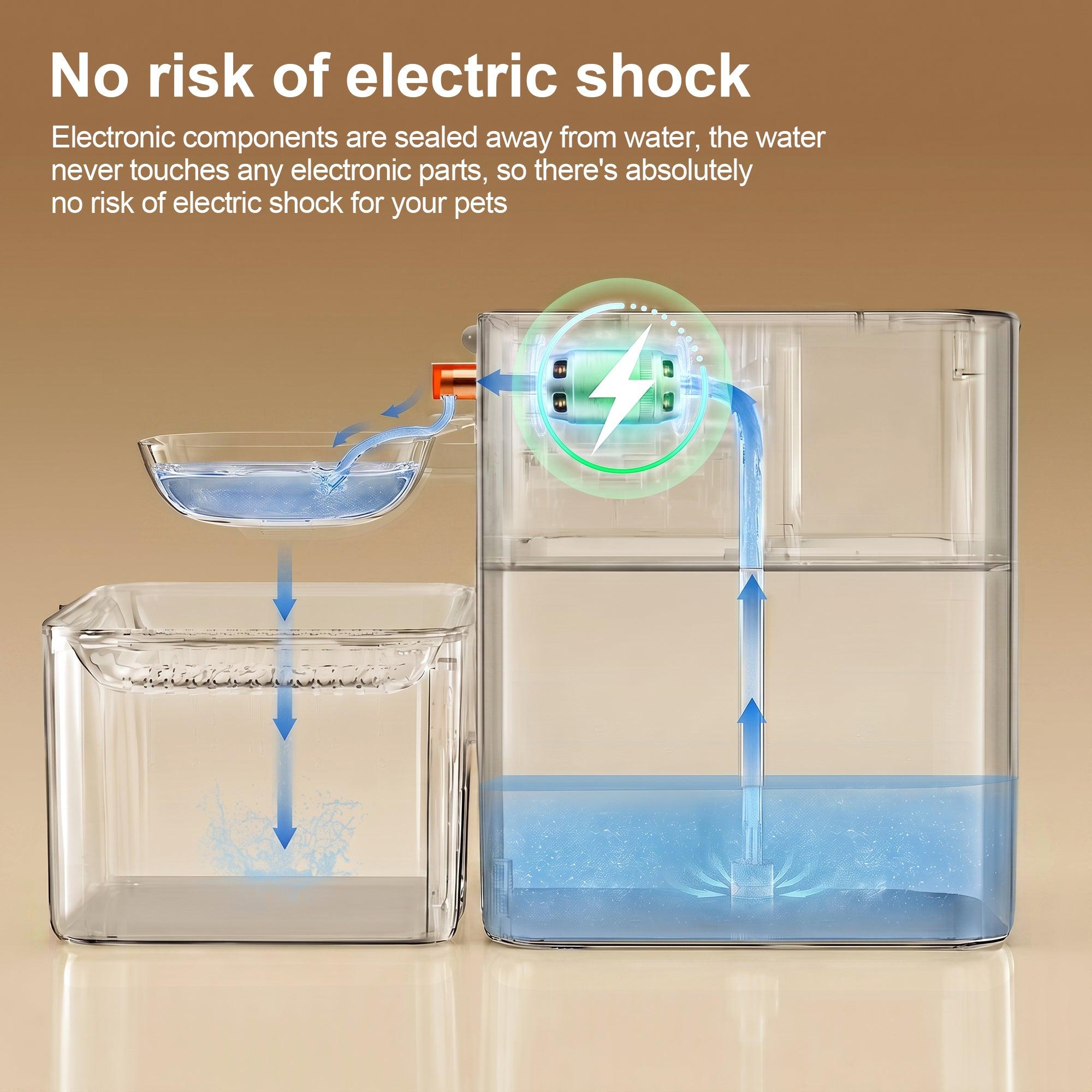
Cats are sensitive to unfamiliar sound, and a fountain that gurgles loudly or hums near its bowl can drive a nervous cat away. Look for adjustable flow, so you can start with a gentle stream and increase it once your cat is comfortable. Pumps that run submerged are usually quieter than external designs. Place the fountain on a mat to absorb vibration, and check that the water level stays above the pump intake, since a pump pulling air becomes noticeably louder.
Filters and Water Quality
Filters capture hair, dust, and food particles that would otherwise circulate back into the drinking water. They are genuinely useful, but they must be replaced on schedule, or they become a breeding ground rather than a benefit. Many units combine a foam pre-filter with carbon and ion-exchange media. Replace the foam weekly and the main cartridge as directed, and rinse the pump impeller regularly to prevent slime buildup.

Stainless steel or ceramic drinking surfaces resist bacteria and are easier to sanitize than porous plastic. Whichever material you choose, a full disassembly and wash once a week is the single habit that keeps a fountain pleasant rather than a source of odor.
Getting a Cat to Accept a Fountain
Even a well-designed fountain can be ignored if it appears suddenly. Introduce it gradually. Place it near the old water bowl at first, with both available for a week or two. Run it on the lowest setting and let your cat investigate without pressure. Some cats need to see you touch the water or drip a little from your finger before they trust it.
Keep the fountain away from the litter box and away from loud appliances. If your cat is skittish, avoid placing it in a busy hallway. Watch for signs of interest, such as pawing at the stream or lingering nearby, and give the cat time. If the fountain is still ignored after two weeks, try changing the flow or moving it to a different room before concluding it will not work. Meowant’s fountains are designed with quiet pumps and shallow drinking surfaces for exactly this kind of easy introduction.
A backup bowl of still water should always remain available. Fountains occasionally stop when a pump clogs or the reservoir empties, and a cat should never be left without water because of a mechanical failure. Keeping both options in place also tells you which one your cat actually prefers.
Maintenance Habits That Keep Water Fresh
A fountain is only as good as its upkeep. Empty and refill the reservoir every couple of days, and do a full wash weekly with warm water and a mild pet-safe soap. Skip strong cleaners, which can leave a scent that puts cats off. Inspect the pump for hair wrapped around the impeller, and keep spare filters on hand so replacement never gets postponed.
Watch the water level, especially in dry seasons or homes with multiple pets. A fountain that runs dry can burn out its pump and, more importantly, leaves cats without water. If you notice reduced flow, the usual causes are a clogged filter, a dirty impeller, or a kink in the cord. Each is a quick fix that keeps the fountain doing its job.
Water temperature is easy to ignore and surprisingly influential. Some cats prefer cool, freshly poured water, while others drink more from a fountain that has warmed to room temperature. Try both before assuming your cat is simply uninterested. In homes with hard water, mineral buildup can clog filters and pumps faster, so a monthly descaling rinse with a pet-safe solution extends the life of the unit. If you use filtered water in the reservoir, the main cartridge lasts longer and the pump runs cleaner.
Noise is another maintenance signal. A fountain that starts to hum or gurgle more than usual usually needs attention, not a replacement. Re-seat the pump, top up the reservoir, and clear any hair from the intake. Owners who learn these three checks keep a fountain quiet for years.
Power is an easy thing to overlook. Most fountains run on a small adapter, and a loose connection or a cord under a rug can cause intermittent stops that look like a failing pump. Check the plug and the cable route before ordering parts. If the fountain sits in a spot with frequent outages, keep a backup bowl filled so water is always available. None of this is complicated, but each small habit adds up to a fountain that runs quietly and reliably for years rather than one that gets unplugged because it became a chore.
Small Change, Noticeable Difference
A pet water fountain is not a cure for every health concern, but it addresses a common and easily overlooked problem: cats that simply do not drink enough from a still bowl. Moving water appeals to their instincts, encourages more frequent sips, and supports the hydration that affects urine concentration, digestion, and coat condition. The key is choosing a quiet, easy-to-clean model and keeping up with filters and weekly washing. Introduce it gradually, leave a backup bowl in place, and give your cat time to adjust. With those habits, a fountain can become one of the most low-effort improvements you make to your cat’s daily care.