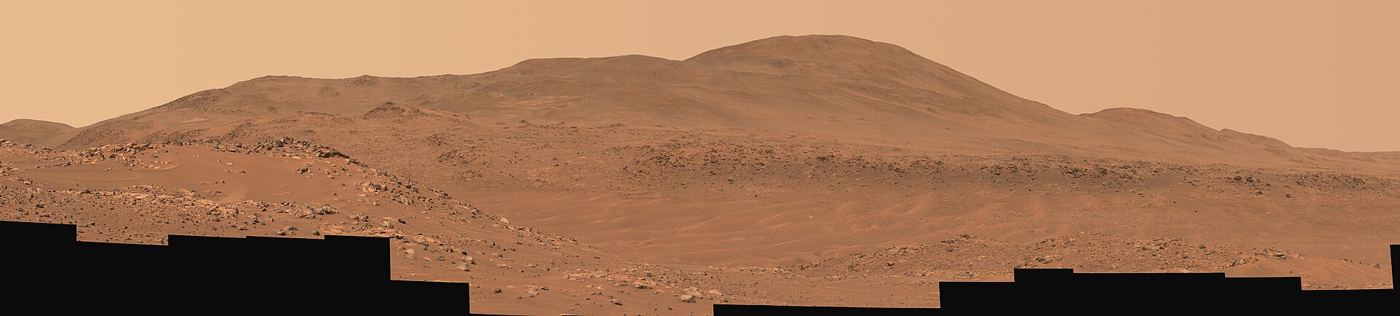
It was designed to fly five times over 30 days. Instead, NASA’s Ingenuity helicopter flew 72 times on Mars over nearly three years, becoming one of the most successful machines ever sent to another world. Ingenuity arrived on Mars in February 2021 attached to the Perseverance rover, and on 19 April 2021 it made the first powered, controlled flight on another planet, rising about three metres and hovering for 39 seconds in air less than one percent as dense as Earth’s. Its four carbon-fibre rotor blades spun at about 2,400 revolutions per minute, five times faster than a helicopter on Earth would need. Over its mission it flew a total of about 17 kilometres and spent nearly 129 minutes in the air, scouting ahead of Perseverance and photographing terrain the rover could not reach.
What the Evidence Shows
The mission ended on 18 January 2024, when Ingenuity’s final flight ended with damage to at least one rotor blade after a hard landing on a featureless stretch of sand that confused its navigation cameras. NASA declared the mission over, but the helicopter’s legacy is already shaping the future of space exploration. Its success proved that flight is possible in Mars’s thin atmosphere and that aerial scouts can multiply what a rover achieves, and future missions are planned around that lesson, including a proposed fleet of helicopters to help collect the rock samples Perseverance has gathered. NASA is already designing a larger successor, roughly six times heavier, that could carry science instruments of its own and fly for kilometres at a time. Ingenuity now sits silent in Jezero Crater, its job done, having flown fourteen times farther and lasted thirty-five times longer than its designers ever promised. Reporting and analysis from sources such as NASA track the same developments, and specialists following Ingenuity Mars helicopter flights say the direction is now consistent across independent lines of evidence.
The Wider Context
Funding bodies are watching Ingenuity Mars helicopter flights closely because the work sits at the junction of basic curiosity and practical return. Grant panels increasingly ask for a path from discovery to application, while researchers push back that the most valuable uses of fundamental science are rarely the ones written into the original proposal. The tension is productive when both sides stay honest about timescales.
What Happens Next
The long view on Ingenuity Mars helicopter flights is that fields advance by accumulation rather than by single announcements. This result adds a solid, checkable piece to a structure many teams are building, and its authors have shared their data so the piece can be tested from every side. That is how the picture eventually becomes reliable enough to act on. You can follow related developments in our coverage of science.
It is also worth remembering how quickly the picture in this area has changed before. Positions that looked settled a few years ago have been revised as new data arrived, and the same humility is appropriate now. The strongest coverage of this subject, and the most useful advice, tends to come from sources that update their views openly when the facts move, rather than defending an earlier position long after it has stopped fitting the evidence available.