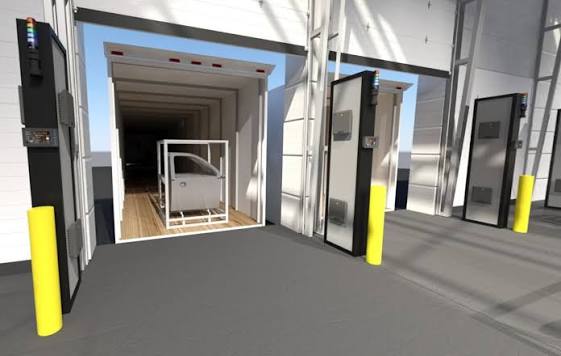
RFID Gates and Their Core Functionality
RFID gates have become an essential part of modern identification, tracking, and security systems across many industries. These intelligent systems use Radio Frequency Identification technology to automatically detect and identify RFID-tagged objects or individuals as they pass through a designated entry or exit point. Unlike traditional barcode systems that require direct line-of-sight scanning, RFID gates can read multiple tags simultaneously without physical contact, making them significantly faster and more efficient. This capability has made RFID gates increasingly popular in environments where speed, accuracy, and automation are critical. From warehouses and retail stores to hospitals, libraries, airports, and manufacturing facilities, organizations rely on RFID gates to improve operational efficiency while reducing manual labor and human error.
An RFID gate typically consists of antennas, RFID readers, control software, and supporting infrastructure designed to capture information from RFID tags within its reading zone. As tagged products, equipment, or personnel move through the gate, the system instantly records the data and sends it to a centralized database for monitoring and analysis. This real-time visibility enables businesses to track inventory movement, monitor employee access, prevent unauthorized removal of assets, and improve compliance with operational procedures. Modern RFID gates are available in various configurations, including UHF RFID gates for long-range applications and HF RFID gates for specialized environments such as libraries. Advanced systems also incorporate intelligent filtering algorithms that minimize duplicate reads and ensure highly accurate data collection. As organizations continue embracing automation and digital transformation, RFID gates provide a reliable foundation for smarter, faster, and more connected operations.
Applications of RFID Gates Across Different Industries
The versatility of RFID gates allows them to support a wide variety of industries with unique operational requirements. In retail environments, Portiques RFID help prevent theft while simultaneously monitoring inventory movement between stockrooms and sales floors. Retailers gain real-time visibility into product availability, enabling faster replenishment and improved customer satisfaction. Electronic article surveillance combined with RFID technology offers greater accuracy than conventional security systems because it identifies the exact product leaving the premises rather than simply triggering an alarm. This detailed visibility allows retailers to reduce shrinkage while improving inventory accuracy and store efficiency.
Warehousing and logistics companies depend heavily on RFID gates to automate shipment verification, receiving, and dispatch operations. Instead of manually scanning each carton or pallet, entire shipments can pass through RFID gates where dozens or even hundreds of tagged items are identified within seconds. This significantly reduces processing time while minimizing human error during inventory management. Manufacturing facilities also benefit by tracking raw materials, work-in-progress items, and finished goods throughout production. Hospitals use RFID gates to monitor expensive medical equipment, ensuring that critical devices remain available when needed while preventing unauthorized movement. Libraries continue to utilize RFID gates for automatic book identification, self-checkout, and anti-theft protection without slowing visitor traffic. Educational institutions, government facilities, airports, and data centers also deploy RFID gates for secure access control, personnel monitoring, and asset management. The adaptability of RFID technology makes these systems valuable wherever automated identification and movement tracking are essential.
Key Benefits of Implementing RFID Gate Systems
Organizations investing in RFID gates experience numerous operational advantages that extend beyond simple identification and security. One of the most significant benefits is increased efficiency. Automated reading eliminates the need for manual scanning, allowing employees to focus on higher-value tasks rather than repetitive inventory counting or access verification. This automation reduces labor costs while accelerating workflows across departments. High-speed tag detection also enables organizations to process larger volumes of goods or personnel without creating bottlenecks, making RFID gates particularly valuable during peak operational periods.
Accuracy represents another major advantage. Since RFID gates automatically capture data electronically, the likelihood of human input errors decreases substantially. Real-time visibility into asset movement improves inventory management, reduces misplaced items, and supports better decision-making based on reliable information. Businesses can maintain accurate stock levels, reduce out-of-stock situations, and optimize replenishment strategies through continuous tracking. Enhanced security is equally important because RFID gates immediately identify unauthorized movement of protected assets, triggering alerts before losses occur. Integration with enterprise resource planning systems, warehouse management software, and security platforms creates a unified operational environment where information flows seamlessly across departments. RFID gates also contribute to regulatory compliance by maintaining detailed records of asset movement, personnel access, and inventory transactions. These digital audit trails simplify reporting while supporting internal quality assurance initiatives. Over time, improved operational efficiency, reduced losses, and enhanced visibility often generate a strong return on investment that justifies initial implementation costs.
Important Factors to Consider When Choosing RFID Gates
Selecting the right RFID gate system requires careful evaluation of operational requirements, environmental conditions, and long-term business objectives. One of the first considerations is the type of RFID technology needed. Ultra High Frequency RFID systems typically offer longer read ranges and higher reading speeds, making them suitable for logistics, warehousing, and manufacturing. High Frequency RFID solutions, meanwhile, are commonly selected for applications requiring shorter read distances and greater precision, such as libraries and document tracking. Understanding the organization’s workflow ensures the selected system delivers optimal performance without unnecessary complexity.
Read accuracy is another essential consideration. Factors such as antenna placement, gate width, tag orientation, surrounding metal objects, and environmental interference can all affect system performance. Experienced system integrators often conduct site surveys before installation to optimize antenna positioning and minimize signal interference. Scalability should also be evaluated because many organizations expand RFID deployments over time. Choosing modular systems capable of supporting additional readers, antennas, and software integrations provides greater flexibility for future growth. Software compatibility plays an equally important role. RFID gates should integrate smoothly with existing inventory management systems, warehouse management platforms, access control software, and enterprise applications. Durability is particularly important for industrial environments where equipment may be exposed to dust, moisture, vibration, or temperature fluctuations. Organizations should also assess vendor support, maintenance services, software updates, and technical expertise to ensure long-term system reliability. Investing in comprehensive training helps employees maximize the benefits of RFID technology while minimizing implementation challenges during deployment.
The Future of RFID Gates in Smart Business Operations
As digital transformation accelerates across industries, RFID gates are becoming increasingly intelligent, connected, and data-driven. Integration with cloud computing enables organizations to monitor RFID events from multiple facilities through centralized dashboards accessible from virtually anywhere. Internet of Things technologies further enhance RFID gate capabilities by connecting readers with sensors, cameras, automated conveyors, robotics, and industrial control systems. This interconnected ecosystem provides comprehensive operational visibility while enabling automated responses based on real-time events. Artificial intelligence and machine learning are also beginning to improve RFID data analysis by identifying operational patterns, predicting inventory shortages, detecting unusual asset movement, and supporting proactive decision-making.
Future RFID gate systems are expected to deliver even greater read accuracy, longer detection ranges, faster processing speeds, and improved cybersecurity features to protect valuable operational data. Enhanced analytics will provide deeper insights into workflow optimization, asset utilization, and supply chain performance. Smart factories will increasingly integrate RFID gates with autonomous mobile robots and automated storage systems to create highly efficient production environments with minimal manual intervention. Retail businesses will continue using RFID gates to support frictionless shopping experiences, automated checkout, and real-time inventory visibility. Healthcare organizations will leverage advanced RFID solutions to improve patient safety, equipment availability, and regulatory compliance. Sustainability initiatives may also benefit as RFID gates reduce paper-based documentation while improving resource utilization throughout supply chains. As businesses continue pursuing automation, operational excellence, and data-driven management, RFID gates will remain a fundamental technology supporting secure, efficient, and intelligent operations across virtually every major industry. Their ability to provide accurate, real-time identification while integrating seamlessly with modern digital infrastructure ensures RFID gates will continue playing a vital role in the evolution of smart enterprises for years to come.