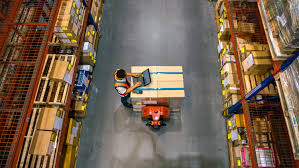
1. Ergonomic Lifting Equipment Reduces Workplace Injuries
Industrial workplaces often require employees to lift, move, position, and transport heavy or awkward materials throughout the day. When these tasks are performed manually or with unsuitable equipment, workers can experience muscle strains, back injuries, joint problems, fatigue, and repetitive stress injuries. TAWI lifting equipment is designed to reduce these physical demands by helping employees handle materials in a safer and more controlled manner. Equipment such as ergonomic lifting devices, vacuum lifters, lifting tables, material handling systems, hoists, manipulators, and powered lifting aids can significantly reduce the amount of force workers need to apply. Instead of bending repeatedly, stretching, twisting, or carrying heavy objects over long distances, employees can use equipment that supports the load and allows it to be positioned correctly. This is particularly important in manufacturing plants, warehouses, construction facilities, logistics centers, workshops, and other industrial environments where material handling is a routine part of daily operations. Ergonomic lifting solutions can also help companies address common workplace hazards associated with manual handling. For example, lifting a heavy component from floor level to a workbench may require awkward posture and considerable physical effort when performed manually. With an adjustable lifting table, the material can be raised to a comfortable working height, allowing the employee to maintain a more natural posture. Similarly, vacuum lifting equipment can allow workers to move panels, sheets, glass, containers, and other materials with significantly less physical strain. By reducing unnecessary physical stress, ergonomic equipment can help create a safer workplace while supporting employees in performing their duties more comfortably. Injury prevention is not simply about protecting workers; it can also have a direct impact on business performance. Workplace injuries may lead to medical expenses, compensation claims, employee absences, production delays, and increased workloads for other workers. When ergonomic material handling equipment is properly selected and implemented, businesses can reduce many of the risks associated with manual lifting. A safer working environment can also improve employee confidence because workers know that they have the appropriate tools to complete demanding tasks. This can contribute to better morale, stronger workplace engagement, and a more positive safety culture. In addition, ergonomic lifting solutions can be adapted to different applications and working environments, making them useful for both repetitive lifting operations and occasional heavy-load handling. Rather than expecting employees to adjust their bodies to difficult tasks, ergonomic systems allow the workplace to be designed around human capabilities and limitations. This approach can make daily operations safer, more comfortable, and more sustainable for employees over the long term.
2. Ergonomic Material Handling Improves Employee Productivity
Safety and productivity are closely connected in industrial operations, and ergonomic material handling equipment can improve both at the same time. When workers are required to manually lift and carry heavy materials, a significant amount of time and energy can be consumed simply moving products from one location to another. Repeated manual handling can also cause fatigue, which may gradually reduce an employee’s working speed and concentration. Ergonomic lifting systems help minimize these challenges by making material movement faster, smoother, and more efficient. For example, a powered lifting device can move a heavy load into the required position without requiring several workers to carry it manually. A lifting table can quickly raise or lower materials to an appropriate height, while a manipulator can assist employees in positioning components accurately during assembly. These improvements may appear small during individual tasks, but their impact can become substantial when the same operation is repeated hundreds or thousands of times. One of the most important advantages of ergonomic equipment is that it can reduce unnecessary movements. Employees may otherwise need to walk back and forth, bend down, stretch upward, rotate their bodies, or reposition heavy objects several times before completing a task. Ergonomic systems can bring materials closer to the operator and position them at an appropriate height or angle. This creates a more efficient workflow and allows workers to focus their attention on productive activities rather than physically demanding handling procedures. Ergonomic equipment can also improve consistency. When materials are moved manually, the speed and quality of the task may vary depending on the worker’s physical condition, experience, and fatigue level. Mechanical and powered lifting solutions can provide more controlled movement, helping employees perform repetitive operations with greater consistency. This is particularly valuable in manufacturing environments where precision and repeatability are essential. Another productivity benefit comes from reducing the number of employees required for certain lifting operations. A task that previously required two or three workers may sometimes be completed safely by one trained operator using the appropriate lifting aid. This does not necessarily mean reducing the workforce; instead, employees can be reassigned to higher-value activities where their skills are needed. Businesses can therefore make better use of their available workforce while reducing unnecessary physical effort. Ergonomic lifting equipment can also help minimize production interruptions caused by fatigue or minor injuries. When workers remain physically capable throughout their shifts, they may be able to maintain a more stable level of performance. Over time, improved workflow, reduced fatigue, faster handling, and better task consistency can contribute to higher overall productivity. For industrial businesses, this combination of improved employee well-being and operational efficiency makes ergonomic material handling an important investment rather than simply an additional workplace expense.
3. Proper Lifting Solutions Improve Workplace Efficiency and Workflow
A well-designed industrial workplace depends on efficient movement of people, products, tools, and materials. Industrial lifting solutions can play an important role in creating an organized workflow by ensuring that loads can be moved between workstations with minimal unnecessary effort. Poor material flow can create bottlenecks, increase handling time, and force employees to perform repetitive movements that add little value to the production process. Ergonomic lifting equipment can help solve these issues by integrating lifting and positioning functions directly into the workflow. For example, a production line may use lifting tables to transfer components between different working heights, while vacuum lifters can help operators move large panels from storage areas to processing stations. In warehouse environments, lifting aids can help workers handle heavy packages and products without repeatedly bending or manually carrying them. The result is a more structured process where materials arrive at the right place, at the right height, and at the right time. Ergonomic equipment can also improve workstation design. When a workstation is positioned at an unsuitable height, employees may have to bend, reach, or stretch repeatedly throughout their shift. Adjustable lifting equipment allows the working height to be changed according to the task, product dimensions, and operator requirements. This flexibility can be particularly valuable in workplaces where several employees use the same workstation. Instead of designing the entire operation around a fixed position, companies can create adaptable work areas that accommodate different employees and tasks. Another important advantage is improved load control. Heavy or awkward materials can be difficult to handle manually, especially when they have irregular shapes or require precise positioning. Ergonomic lifting devices can provide controlled movement, making it easier to place loads accurately. This can reduce the likelihood of materials being dropped, damaged, or incorrectly positioned. In manufacturing environments, better load control may also protect expensive components and reduce material waste. Workplace efficiency is further improved when equipment is selected according to the actual needs of the operation. Companies should consider factors such as load weight, dimensions, lifting frequency, movement distance, available floor space, required lifting height, and the number of operators using the equipment. Choosing a solution based solely on lifting capacity may not provide the best results if the equipment is difficult to maneuver or poorly suited to the workflow. A properly designed ergonomic lifting system should integrate naturally into the working environment. Employees should be able to access controls easily, position loads safely, and complete tasks without unnecessary steps. When equipment is easy to operate and fits naturally into the production process, workers are more likely to use it consistently. This can help companies achieve the full safety and productivity benefits of ergonomic material handling. Ultimately, efficient workflow is not only about moving materials faster; it is about creating a system where workers, equipment, and processes work together effectively.
4. Ergonomic Lifting Systems Support Better Employee Comfort and Performance
Employee comfort is sometimes overlooked when companies focus heavily on production targets, but physical comfort can have a major influence on workplace performance. Ergonomic lifting systems are designed around the principle that tools and equipment should support the worker rather than force the worker to adapt to physically demanding conditions. In industrial environments, employees may perform the same lifting, positioning, loading, or unloading task hundreds of times during a shift. Even when individual loads are not extremely heavy, repeated movements can gradually create physical stress. Ergonomic equipment helps reduce this burden by providing mechanical assistance and allowing workers to maintain more natural body positions. Improved comfort can contribute to better concentration because employees are less distracted by physical discomfort or fatigue. This is especially important for jobs that require accuracy, coordination, or attention to detail. A worker who is physically exhausted may be more likely to make mistakes, overlook safety procedures, or lose concentration during repetitive tasks. By reducing unnecessary physical effort, ergonomic equipment can help employees remain focused for longer periods. It can also support a more positive employee experience. Workers are more likely to appreciate an employer that provides practical tools designed to make difficult tasks safer and easier. This can strengthen morale and encourage employees to take workplace safety more seriously. Training is also an essential part of achieving these benefits. Even the most advanced lifting system cannot guarantee safe operation if employees do not understand how to use it correctly. Workers should receive appropriate instruction on equipment controls, load limits, inspection procedures, safe operating practices, and emergency measures. Employers should also encourage employees to report equipment problems or situations where a lifting process remains physically difficult. These observations can help managers identify opportunities for further improvement. Regular maintenance is equally important. Lifting devices should be inspected and maintained according to manufacturer recommendations and workplace requirements. Damaged components, worn parts, malfunctioning controls, or other problems should be addressed promptly. A well-maintained system is more reliable and helps ensure that workers can perform their duties safely. Businesses can also evaluate ergonomic improvements by monitoring indicators such as injury rates, absenteeism, task completion times, employee feedback, and equipment utilization. This data can help determine whether a particular lifting solution is delivering the expected results. When companies combine suitable equipment with proper training, maintenance, and employee involvement, ergonomic improvements become part of a broader workplace strategy. The objective is not simply to make lifting easier; it is to create working conditions where employees can perform demanding industrial tasks safely, comfortably, and consistently throughout their working lives.
5. Investing in Ergonomic Lifting Equipment Creates Long-Term Business Value
Investing in ergonomic lifting equipment for industrial workplaces can provide benefits that extend well beyond immediate improvements in manual handling. Although purchasing lifting tables, vacuum lifters, manipulators, hoists, or other material handling systems requires an initial investment, businesses should evaluate the long-term value created by safer and more efficient operations. Workplace injuries, equipment damage, employee downtime, production interruptions, and inefficient material movement can all create significant hidden costs. Ergonomic lifting solutions can help reduce these expenses by addressing physical handling challenges at their source. One of the strongest long-term benefits is the potential reduction in work-related musculoskeletal injuries. Fewer injuries can mean fewer disruptions, lower associated costs, and a more stable workforce. At the same time, employees who experience less fatigue may be able to maintain consistent productivity throughout their shifts. This can help companies improve output without simply increasing workloads. Ergonomic equipment may also extend the practical capabilities of existing employees by allowing them to safely handle materials that would otherwise require significant physical strength. This can make the workplace more adaptable and inclusive while improving workforce utilization. Another advantage is improved product protection. Manual handling of large, heavy, fragile, or awkward products can increase the risk of accidental drops and damage. Controlled lifting systems provide greater stability and precision, helping businesses protect valuable materials during transportation and positioning. Lower product damage can contribute to reduced waste and better customer satisfaction. Companies should also consider ergonomics as part of their broader operational improvement strategy. The best results are achieved when management evaluates the entire material handling process rather than purchasing equipment for individual problems. A workplace assessment can identify where employees experience excessive lifting, bending, reaching, carrying, pushing, or pulling. Businesses can then determine which tasks would benefit most from mechanical assistance. In some cases, a relatively simple lifting aid may deliver significant improvements; in other situations, a customized material handling system may be more appropriate. The most effective solution will depend on the specific workplace, load characteristics, production requirements, and employee needs. As industrial operations continue to prioritize efficiency, safety, and sustainability, ergonomic lifting technology is becoming an increasingly valuable component of modern workplace design. Companies that invest in suitable equipment demonstrate that productivity and employee safety do not have to be competing priorities. Instead, they can support each other when the right tools and processes are introduced. Ultimately, ergonomic lifting equipment improves industrial workplace safety and productivity by reducing physical strain, minimizing unnecessary movement, supporting efficient workflows, improving employee comfort, and protecting materials. With proper selection, training, maintenance, and implementation, ergonomic lifting solutions can become a long-term investment that benefits workers and businesses alike.